Kitchen guide
Small Pantry Organization Ideas That Make Room
By Homeward Goods ·
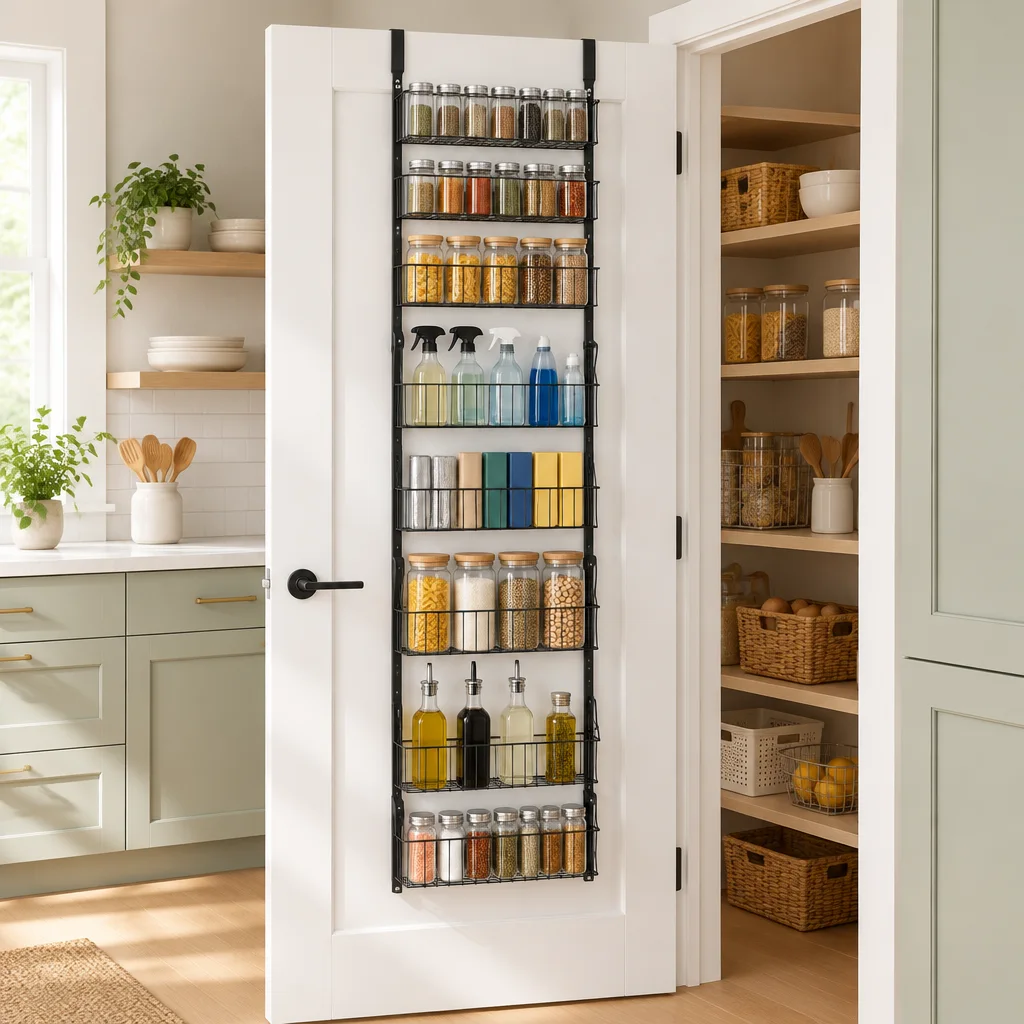
A small pantry rarely runs out of space because it's too small. It runs out because food gets pushed to the back, bought twice and forgotten. Fixing that is less about buying containers and more about deciding where things live.
This guide covers how to sort and zone a small pantry, how to use space most people skip, and what to do if your kitchen has no pantry at all.
Empty it out and sort before you buy anything
It's tempting to start with containers, but organizing a pantry starts with taking everything out. You can't plan space for food you haven't counted, and almost every pantry is hiding duplicates and expired cans.
- Take everything out and wipe the shelves.
- Throw out anything expired and set aside unopened food you won't use to donate.
- Group what's left into categories: breakfast, snacks, baking, canned goods, pasta and grains, oils and sauces, spices.
- Notice which groups are big and which are small. That tells you how much space each one needs.
Zone shelves by how often you reach for things
The best spots in a pantry are the shelves between your waist and your eyes. Give those to what you use every day. Put everything else above or below based on how often you need it.
- Eye level: daily breakfast, coffee and tea, the snacks you actually eat, cooking oils.
- Lower shelves: heavier items like cans, bottled drinks and bags of potatoes or rice, plus kids' snacks they're allowed to grab.
- Top shelf: backstock, holiday baking supplies, the big roasting pan.
Keep each category in one place. When all the pasta lives together, you can see at a glance whether you need more, which saves money as well as space.
Use the back of the door
In a small pantry, the inside of the door is often the biggest empty surface you have. An over-the-door rack turns it into a column of shallow shelves, which is ideal for small, light things that get lost on deep shelves: spice jars, seasoning packets, drink mixes, snack bars, foil and wrap.
Before you buy one, check two things. First, close the door and measure from the back of the door to the front edge of your pantry shelves; the rack needs that much room or the door won't shut. Second, keep the weight light. Heavy cans and big bottles belong on shelves, not hanging on a door.
No pantry door? The same rack can mount to a wall in a laundry room, beside the fridge or in a garage.
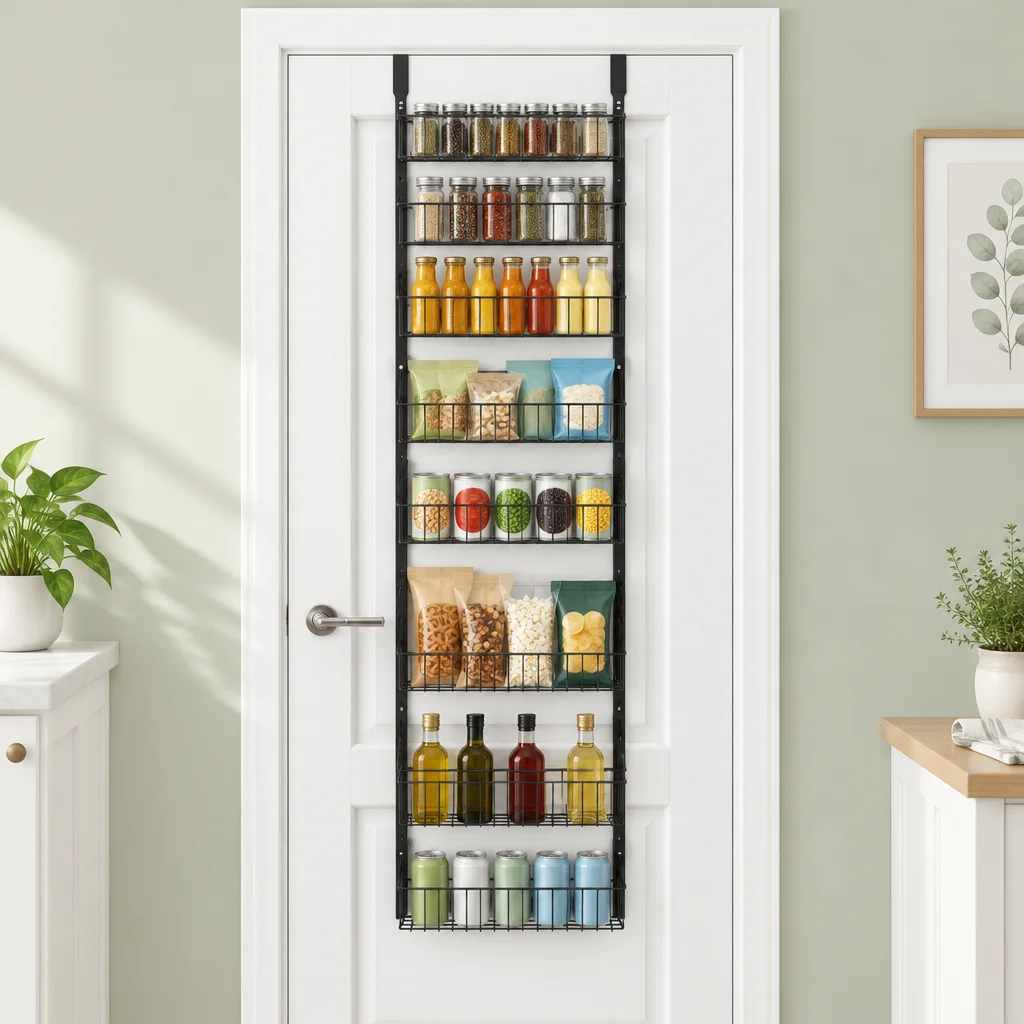
Pantry Organizer
Eight baskets with adjustable spacing on a black steel frame. Fits doors up to 2" thick and needs at least 7.1" of clearance behind the door. Holds up to 26.5 lb total, about 3.3 lb per basket, and can mount to a wall with the included screws.
$59.99
See detailsMake deep shelves work like drawers
Deep shelves are where food goes to be forgotten. The fix is to make the back of the shelf come forward to you.
- Put open bins on deep shelves and pull them out like drawers. Label the front so everyone knows what goes where.
- Use a tiered riser for cans so the back row is visible over the front row.
- A turntable in a corner keeps oils, vinegars and sauces within reach.
- Stand flat things like baking sheets and cutting boards on edge, the way books go on a shelf.
No pantry? Build one with furniture
Lots of apartments have no pantry at all, just a few upper cabinets. In that case, a freestanding piece can become the pantry.
A slim rolling cabinet fits beside the counter or fridge and slides out when you need it. Divided tiers keep cans, snacks and jars upright, and the top gives you a little extra counter space for a coffee setup or fruit bowl.
If you have a wall free in the dining area or a hallway near the kitchen, a wider cabinet with drawers and doors can hold pantry overflow without looking like kitchen storage. Use the drawers for tea, snack packets, foil and wrap, and the shelves behind the doors for paper goods, bulk bags and backstock.
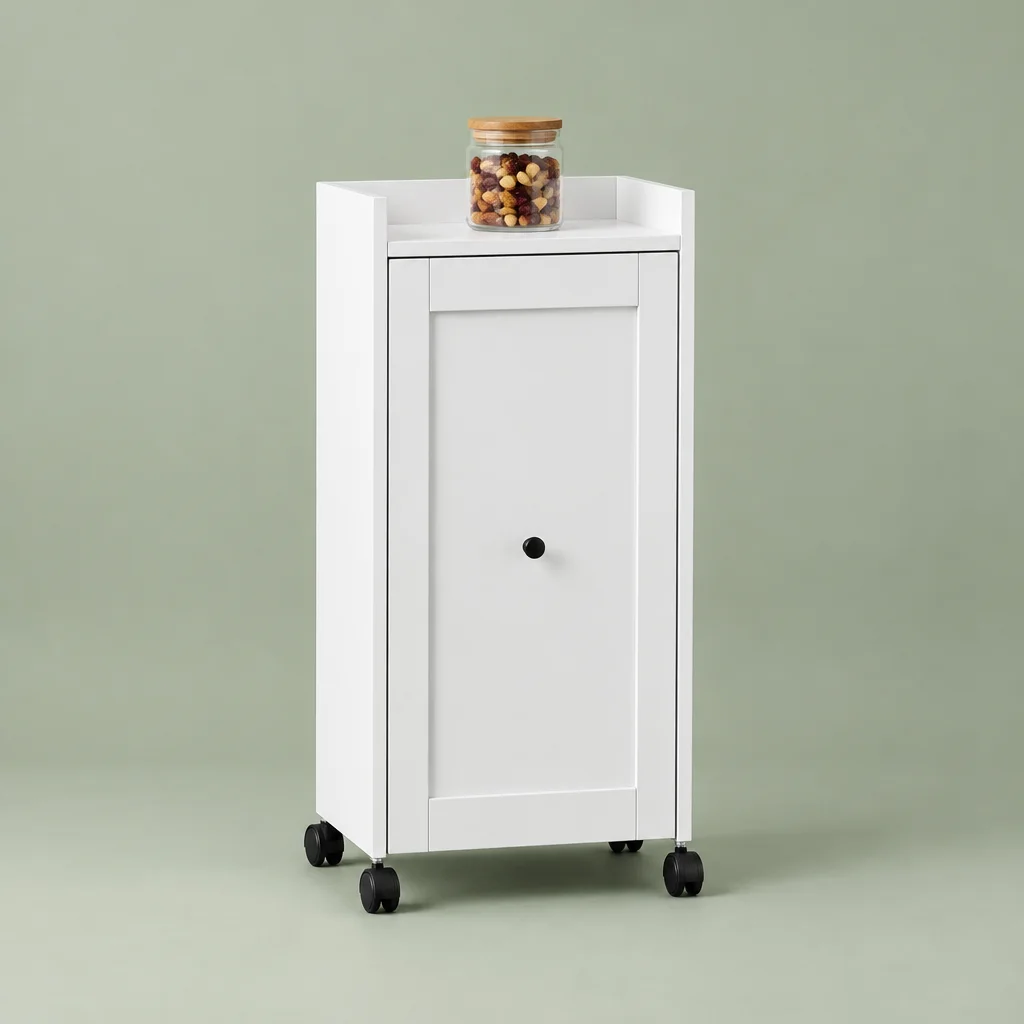
Rolling Pantry Cabinet
15.4" W x 15.8" D x 24.2" H on casters, with slide-out storage across three divided tiers and a top that works as extra counter space. White melamine wipes clean.
$149.99
See details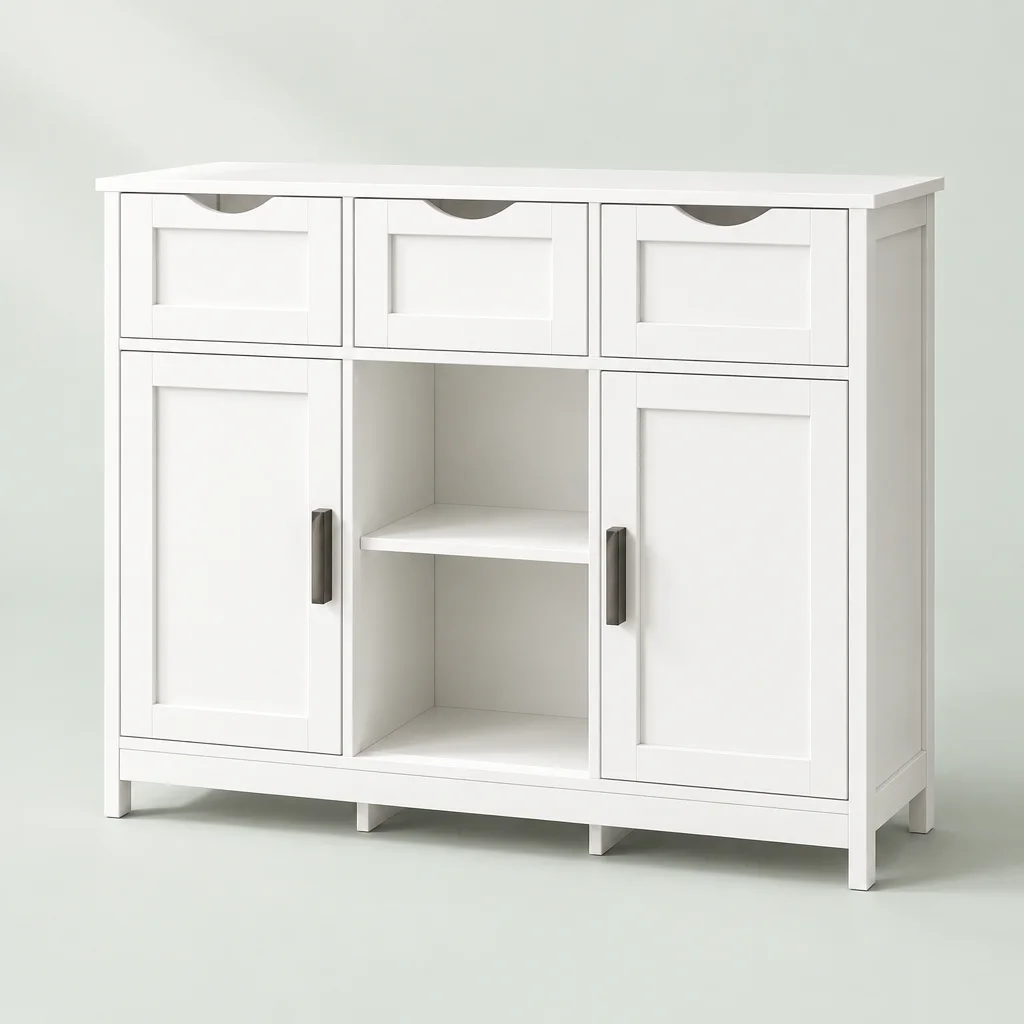
Storage Cabinet
35.4" W x 11.8" D x 31.1" H, with three drawers, two doors, an open center shelf and three adjustable shelves. Also works as a buffet or coffee bar.
$189.99
See detailsContainers: when to decant and when not to
Clear containers are popular for good reason: you can see what you have and how much is left. But decanting everything takes time and money, and it doesn't always save space.
- Worth decanting: things you buy over and over and use from often, like flour, sugar, rice, oats, cereal and pasta.
- Fine in the original package: cans, jars, boxes you go through quickly and anything with cooking instructions you need.
- Square or rectangular containers fit together on a shelf better than round ones.
- When you decant, write the expiration date on a strip of tape on the bottom, or cut the instructions from the box and tape them to the container.
Keep it organized
A pantry stays organized when it's easy to put things back. A few habits help:
- Put new groceries behind the older ones so the older food gets used first.
- Check the pantry before every grocery run so you don't buy things you already have.
- Keep a running list on the inside of the door and add to it when something runs low.
- Do a quick reset once a month: pull out anything in the wrong zone and wipe up spills.