Kitchen guide
Dish Drying Rack Ideas for Small Kitchens
By Homeward Goods ·
In a small kitchen, the dish rack is often the biggest thing on the counter. It sits beside the sink all day, takes up the space you need for chopping and still somehow isn't big enough for the pots from dinner. The fix usually isn't a smaller rack. It's a smarter one, in the right spot, with a plan for where the clean dishes go next.
This guide covers how to measure for a dish rack, which designs save the most space, how to keep a rack from getting musty and how to win back counter space around the sink.
Measure your sink and counter first
In a small kitchen, a dish rack that's a few inches too big takes over the only free counter you have. Before you choose a style, spend five minutes with a tape measure.
- The counter beside the sink: how deep it is from the backsplash to the edge, and how much width you can give up without losing your prep space.
- The sink: its width from rim to rim, and whether there's a lip or ledge the rack could rest on. This decides whether an over-the-sink design will reach.
- The height under any wall cabinets or a window sill above the counter, so a two-tier rack and tall plates still fit.
- Where the faucet swings. A rack that sits in its path gets knocked every time you rinse a pan.
Then think about how you wash. If you hand-wash after every meal, you need a rack big enough for a full load. If you run a dishwasher and only hand-wash pans and knives, a smaller rack or a folding one may be all you need.
Go up: a two-tier rack doubles the space
The simplest way to dry more dishes on less counter is to stack the drying space. A two-tier rack puts plates on a top level and bowls, cups and pans on the bottom, so it holds roughly twice as much in about the same footprint as a single-level rack.
Look for a top rack that folds down or lifts off when you don't need it, so the rack doesn't look bulky on days with only a few dishes. Plates dry best standing upright in slots, with a little space between each one so air can move.
Reach over the sink instead of across the counter
The sink is the one place in the kitchen where dripping water doesn't matter. An expandable rack uses that: the lower rack extends out over the sink, so wet pans drip straight down the drain and the part on the counter can stay small.
When you're done, slide the extension back in and the rack shrinks to fit beside the sink. A drip tray with a spout that turns toward the sink keeps water from pooling on the counter under the rack.
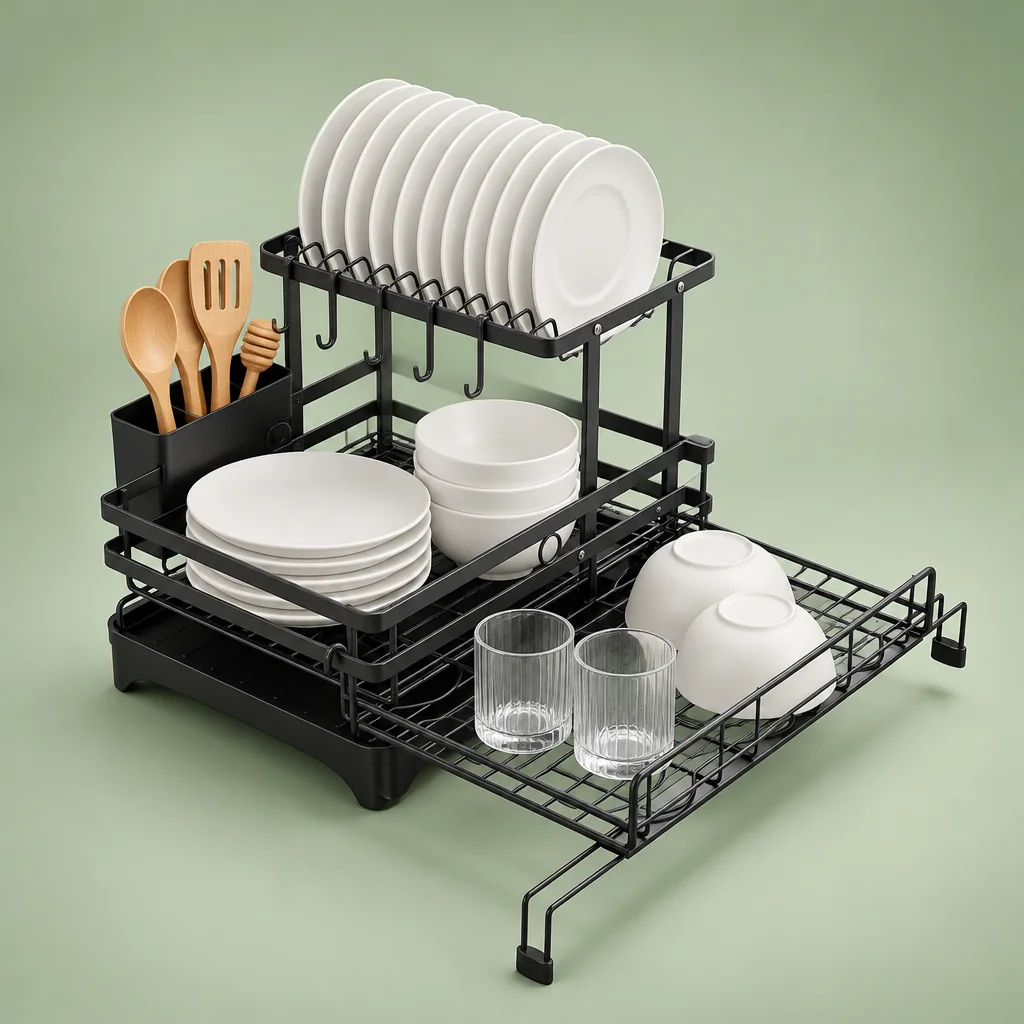
2-Tier Dish Rack
A two-tier rack with a fold-down top rack for plates, cup hooks and a utensil holder. The lower rack extends from about 15.7" to 26.3" to reach over the sink, and a drip tray with a 360° swivel spout drains into it. Black carbon steel frame with plastic parts, about 13" wide at the base and 12.5" tall.
$49.99
See detailsOther space-saving ideas worth knowing
A rack isn't the only answer. Depending on your kitchen and how much you hand-wash, one of these may work alongside it or instead of it:
- A roll-up drying mat that sits across the sink. It's great for a few cups and a cutting board, and it rolls away into a drawer, but it holds less than a rack and plates have to lie flat.
- An absorbent drying mat on the counter for days with extra dishes, folded away when it's dry.
- Wall-mounted or over-the-sink frame racks, which get dishes off the counter entirely but usually need drilling and a clear wall above the sink.
- Drying in the sink itself with an in-sink rack, if you have a double sink and can spare one side.
- Putting dishes away sooner. Towel-dry the big pieces and let only the awkward ones air-dry, and the rack can be smaller.
Keep the rack clean and mildew-free
A dish rack sits in water all day, which is why so many end up with pink or black spots in the tray. A few habits keep it fresh:
- Point the drain spout into the sink so the tray never holds standing water.
- Empty the rack once dishes are dry rather than leaving it full all day; air needs to reach the tray.
- Once a week, take the rack apart and wash the tray, utensil holder and any plastic parts in hot, soapy water. Dry them completely before you put it back together.
- Wipe the counter under the rack too. Water that creeps under the feet is the usual source of the musty smell.
Give clean dishes somewhere to go
A dish rack only stays small if dishes leave it. In many small kitchens the real problem is that the cabinets are full, so clean dishes live in the rack permanently.
Open wall space is often the answer. A shallow wall cabinet with glass doors holds everyday mugs and glasses near the sink, keeps them dust-free and frees up a lower cabinet for plates and bowls. Anchor it into wall studs, and if you rent, check your lease before drilling.
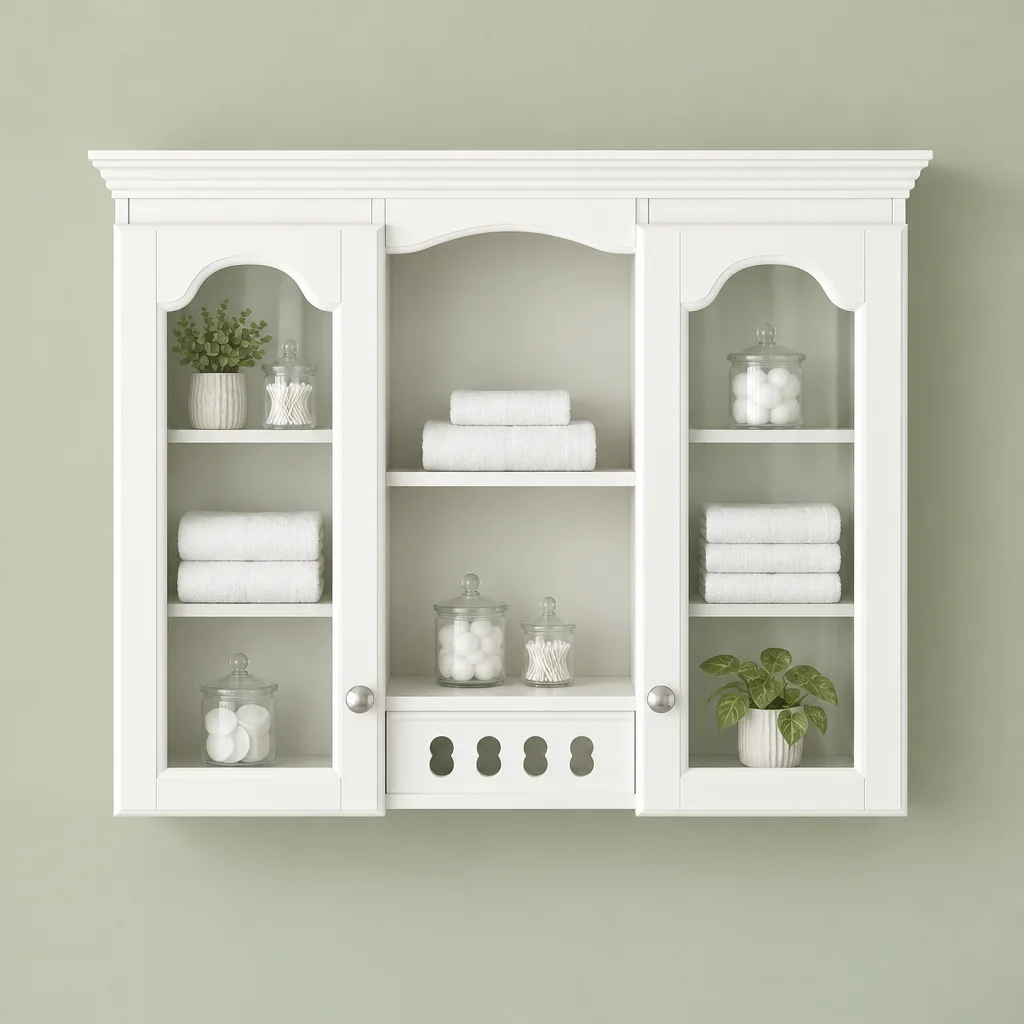
Arched Wall Cabinet
35.3" W x 7.8" D x 28" H with two arched glass doors, open center shelves and height-adjustable shelves. Holds up to 150 lb when mounted, 50 lb per shelf.
$219.99
See detailsWin back counter space around the sink
Once the rack is under control, look at what else crowds the counter. Bulk snacks, cans and jars often end up beside the sink because there's nowhere else for them. A small rolling cabinet takes them off the counter, tucks beside it or into a corner, and its top works as a bit of extra prep space.
If the cabinet under or beside your sink is dark, a stick-on motion light bar makes it much easier to find dish soap, sponges and spare tablets without emptying the shelf.
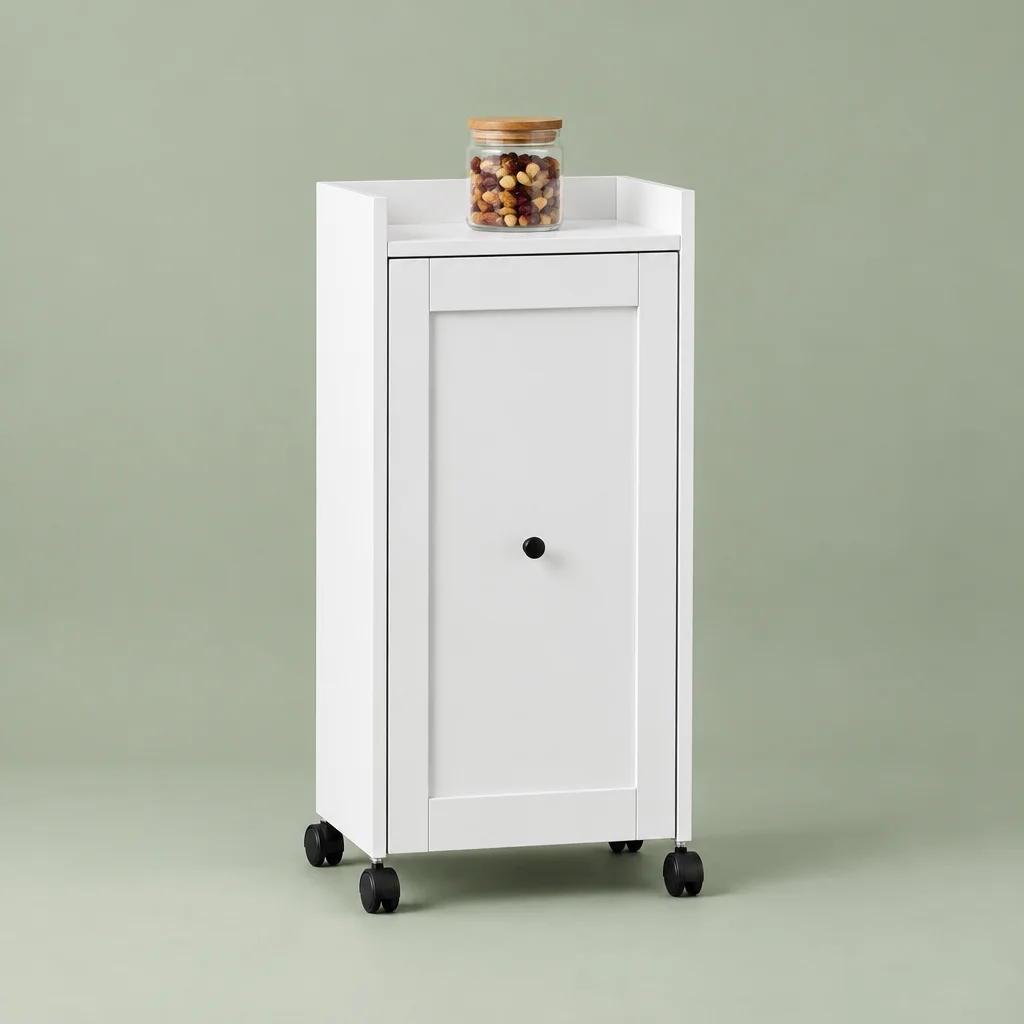
Rolling Pantry Cabinet
15.4" W x 15.8" D x 24.2" H on casters, with three divided slide-out tiers. The top doubles as extra counter space, and the melamine finish wipes clean.
$149.99
See details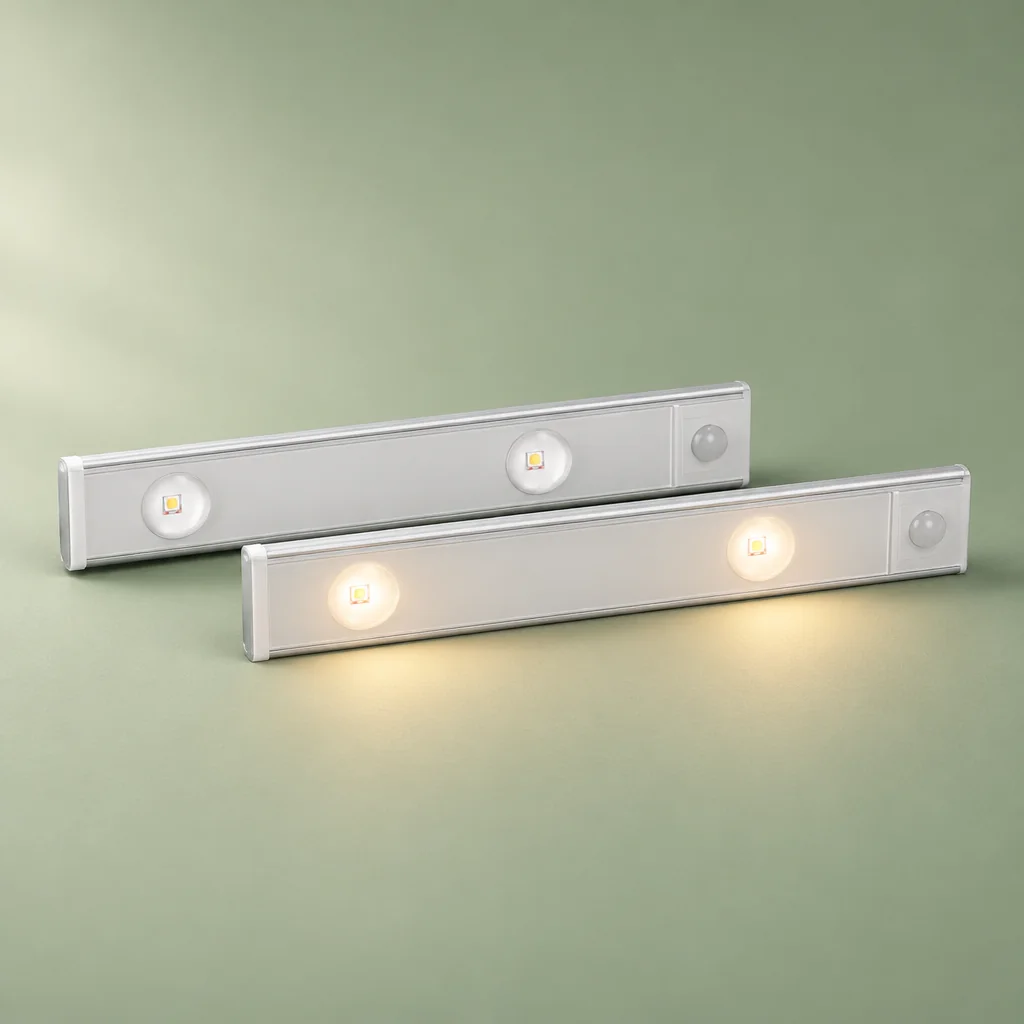
Cabinet Lights (2)
Two rechargeable 7.9" light bars that switch on with motion and mount with adhesive magnetic panels, no wiring or drilling. They charge over USB-C.
$44.99
See detailsFrequently asked questions
What is the best dish rack for a small kitchen?
Usually a two-tier rack that can extend over the sink. Stacking plates above bowls doubles the drying space in the same footprint, and an extending lower rack lets wet pans drip into the sink instead of taking up more counter.
Where should a dish rack go in a small kitchen?
Right beside the sink, on the side with the least useful prep space, with the drain spout pointing into the sink. Keep it out of the faucet's swing and leave clearance under any wall cabinets for tall plates.
How do I keep my dish rack from getting moldy?
Drain the tray into the sink so water never stands in it, empty the rack once dishes are dry, and wash and fully dry the tray and plastic parts about once a week.
Is a drying mat better than a dish rack?
A mat or roll-up rack is easier to put away and works well for a few cups and a board, but it holds less. If you hand-wash full meals, a compact two-tier rack is usually more practical, with a mat as backup.