Bedroom guide
How to Store Comforters and Extra Bedding
By Homeward Goods ·
Comforters are the bulkiest thing most of us own that only gets used part of the year. The summer duvet, the heavy winter one, the spare set for guests: each can swallow a whole closet shelf. Stored badly, they come back out flat, musty or yellowed. Stored well, they take up a fraction of the space and come out fresh.
This guide covers how to prepare a comforter for storage, which method suits down, synthetic and wool fills, how to use vacuum bags without crushing anything, where to keep bedding if you don't have a linen closet, and how to fluff it back up when you need it.
Clean and dry comes first
The most common storage mistake has nothing to do with bags or bins. It's packing a comforter away before it's completely clean and completely dry. Body oils and small stains that you don't notice in December can set and yellow over several months, and any trapped moisture is an invitation for a musty smell or mildew.
Wash or dry-clean the comforter according to its care label before it goes into storage. Then let it dry longer than you think it needs. Thick fills, especially down, can feel dry on the surface while the middle is still damp. A few extra rounds in the dryer on low heat, or a full sunny day on a line, is cheap insurance.
- Check the care label for the fill: down, feather, wool, cotton or polyester.
- Wash shams, duvet covers and spare sheets at the same time so the whole set goes away clean.
- Let everything cool and air out for a few hours after drying before you fold it.
Match the storage method to the fill
Not every comforter wants the same treatment. The main question is how long it will be stored and whether the fill needs to breathe.
- Polyester and other synthetic fills are the easiest. They handle compression well, so a vacuum bag is a good fit even for a full season.
- Cotton quilts and coverlets fold flat and store well on a shelf or in a breathable bag. They don't need much compression.
- Down and feather comforters rely on loft to stay warm. For a few weeks, compression is fine. For many months, many people prefer a breathable cotton bag or only partly compressing the bag so the clusters aren't crushed the whole time.
- Wool fills and blankets are best stored clean and dry with airflow. Cedar blocks or sachets in the same closet or cabinet are a popular, low-effort addition.
Whatever the fill, avoid sealing anything in a plastic bin that sits somewhere humid. Plastic plus moisture is how bedding ends up smelling like a basement.
Use vacuum bags to shrink the bulk
A queen comforter can take up a whole closet shelf on its own. Compressed in a vacuum bag, the same comforter flattens enough to slide under a bed, onto the top shelf of a closet or into the bottom of a cabinet. For guest bedding and off-season duvets, that's often the difference between having a linen closet and not needing one.
To pack one well, fold the comforter to roughly the size of the bag, leaving a few inches of room around the edges, then seal the zipper fully before you pump out the air. Overstuffed bags are the ones that leak. Write the bed size and what's inside on a piece of painter's tape on the bag, so you aren't opening three bags to find the twin set.
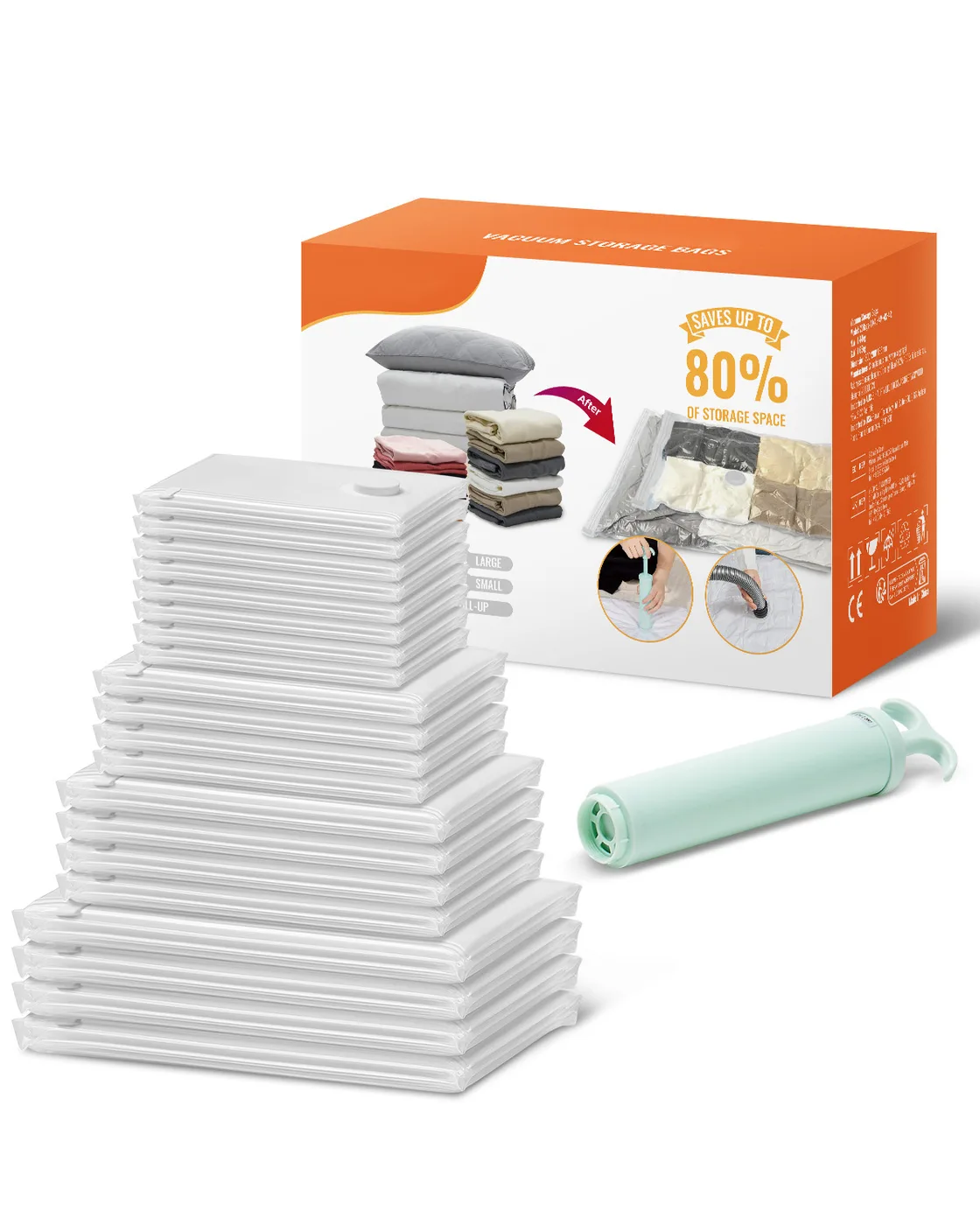
Vacuum Bags (20)
Twenty clear bags in assorted sizes with a hand pump, so you don't need a vacuum cleaner. Made for comforters, blankets, pillows and clothing, and reusable for every seasonal swap.
$34.99
See detailsGive bedding a home without a linen closet
Lots of homes and apartments have no linen closet at all, or one that's already full of towels. A freestanding cabinet with closed doors can do the job in a bedroom, hallway or spare room, and it keeps dust off the bedding better than an open shelf.
Set shelves to the height of a folded comforter so you aren't wasting space above each stack. Store each bed's set together, with the sheets folded and tucked inside one of their own pillowcases, so making the guest bed is a single grab.
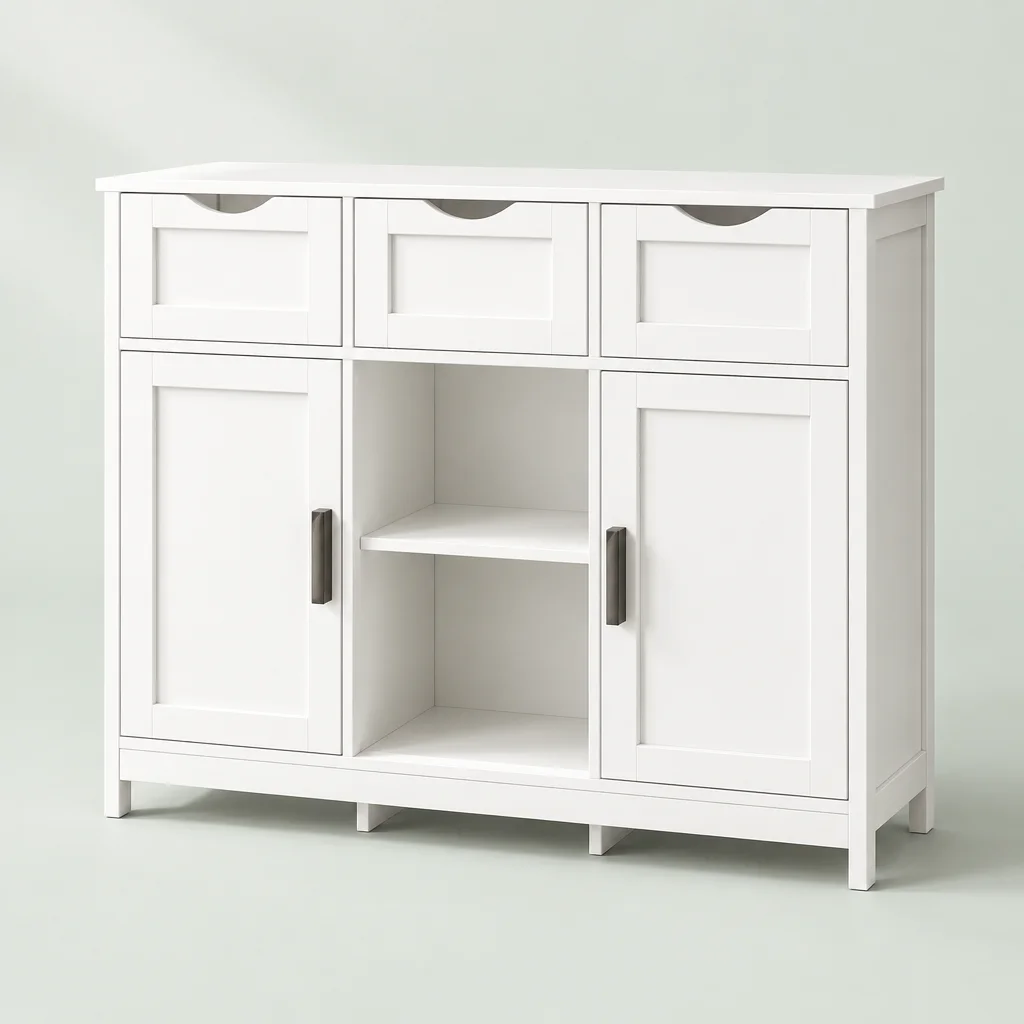
Storage Cabinet
35.4" W x 11.8" D x 31.1" H, with three drawers, two doors, an open center shelf and three adjustable shelves you can set to fit linens. Drawers hold pillowcases and spare sheets; the shelves behind the doors take folded comforters or compressed bags.
$189.99
See details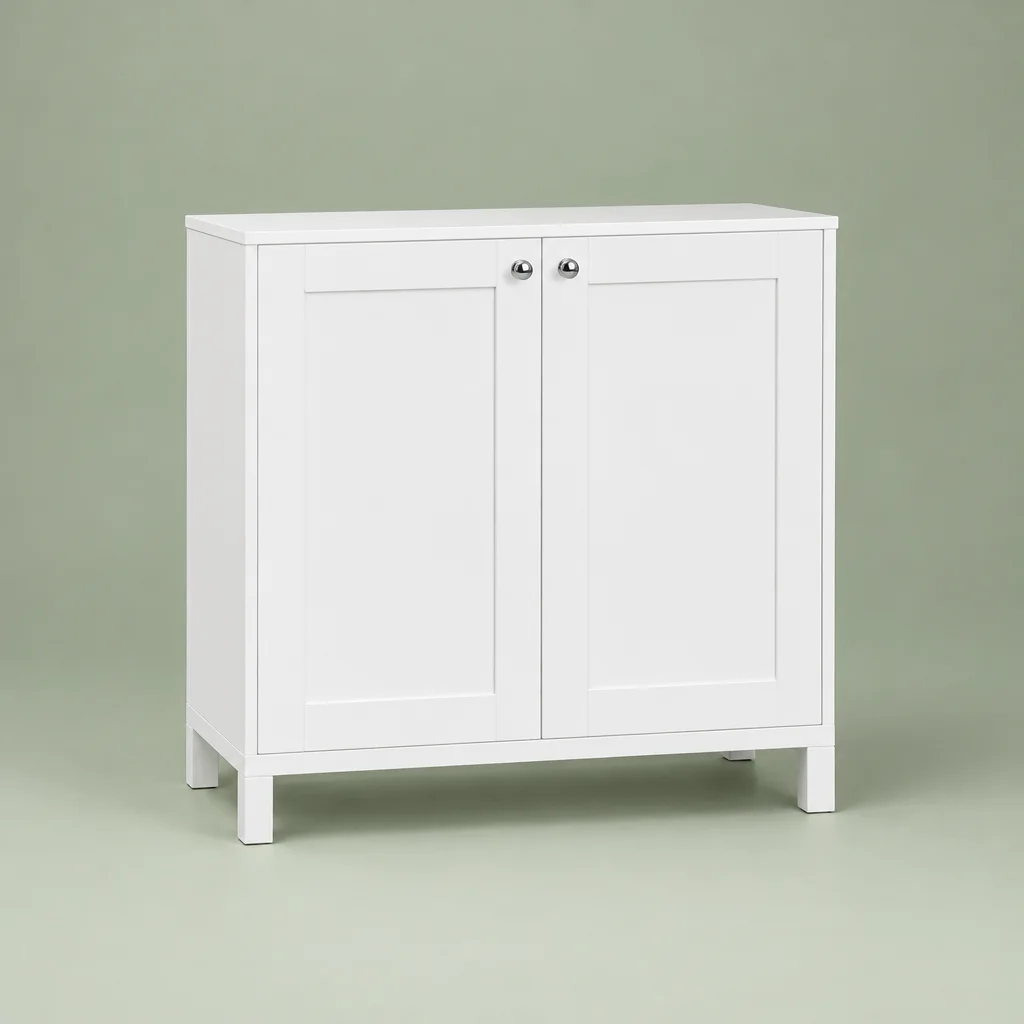
Double-Door Bath Cabinet
23.6" W x 11.8" D x 31.5" H, with two shaker doors on magnetic catches that keep dust out, an adjustable interior shelf and an 88 lb capacity. A narrower option for a hallway or bathroom with no linen closet.
$149.99
See detailsWhere not to store comforters
The best spot is cool, dry, dark and inside your living space. A few places look like free storage but tend to cause problems:
- Attics and garages, where summer heat and big temperature swings are hard on fabric and fill.
- Basements and damp laundry rooms, where humidity can lead to a musty smell or mildew.
- Directly on a concrete floor, which can wick moisture. Lift bins or bags onto a shelf or under a bed instead.
- In front of a sunny window, where light can fade colored covers over time.
Taking it back out
When the season turns, open the bag a day or two before you need the comforter. Shake it out and let it rest flat or draped over a bed so the fill can recover its loft. A short tumble in the dryer on low heat with a couple of clean tennis balls or dryer balls helps down and synthetic fills fluff back up. If it smells stale, an afternoon of fresh air usually fixes it.
While the bag is open, swap in the bedding you're putting away. That way the vacuum bags and the shelf space are always in use by whatever is out of season, and nothing piles up on a chair in between.
Frequently asked questions
What is the best way to store a comforter?
Wash it and dry it completely, fold it, then store it somewhere cool, dry and dark inside your home. Synthetic comforters do well in vacuum bags; down and wool often do better with some airflow for long storage.
Is it OK to store a down comforter in a vacuum bag?
For short periods, yes. For many months, many people only partly compress down or use a breathable cotton bag, so the clusters aren't crushed the whole time. Fluff it in the dryer on low heat when you take it out.
How do I store bedding without a linen closet?
Use a freestanding cabinet with closed doors in a bedroom or hallway, set the shelves to fit folded comforters, and keep compressed bags of off-season bedding under the bed. Store each bed's sheets together inside one of the pillowcases.
Where should I not store comforters?
Avoid attics, garages, basements and damp laundry rooms. Heat, big temperature swings and humidity can damage fill and cause a musty smell or mildew.
How do I get a comforter fluffy again after storage?
Take it out of the bag a day or two early, shake it out and let it rest flat. A short tumble on low heat with dryer balls helps the fill recover its loft.